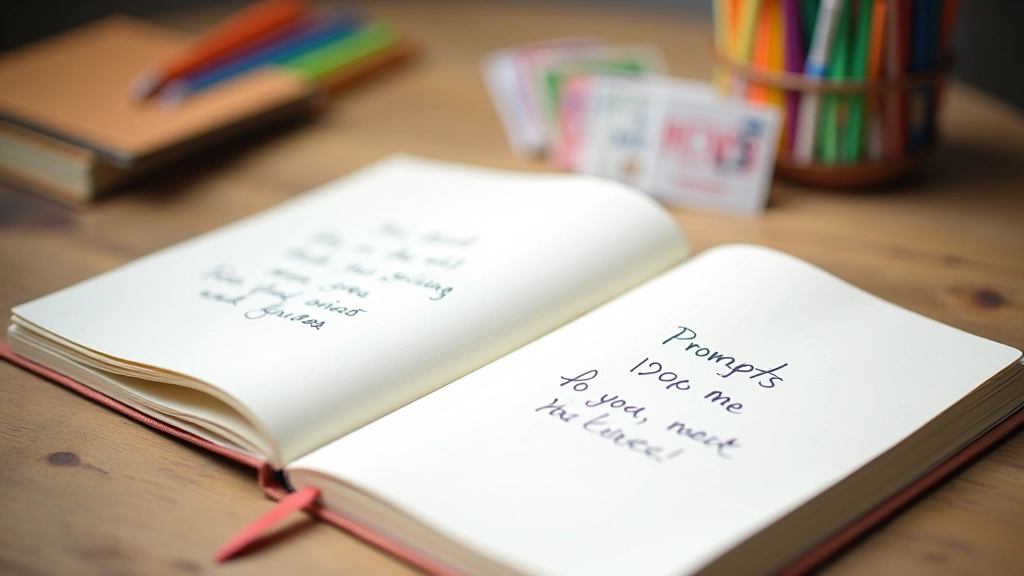

What Exactly Is Free-Writing?
Free-writing is the simplest form of journaling you can try. It’s just you, a pen, and whatever comes to mind. There’s no structure to follow, no “right way” to do it, and absolutely no judgment about what you write. You’re not aiming for perfect sentences or even coherent thoughts — you’re just getting words onto the page without stopping to edit yourself.
The magic happens when you stop thinking about what you should write and just let your hand move. It’s like opening a door in your mind that you didn’t even know was there. Most people discover they’re thinking about things they’d been pushing aside, or they uncover emotions they couldn’t quite name before.
Why Free-Writing Actually Works
When you sit down to journal with a specific goal — say, “I want to understand why I’m anxious about work” — your brain kicks into problem-solving mode. That’s not a bad thing, but it can sometimes stop you from going deeper. Free-writing bypasses that filter. You’re not trying to make sense of anything. You’re just writing.
Within about 10 minutes, something shifts. Your conscious mind (the one that worries about grammar and logic) gets tired and steps back. Your subconscious — where all your real thoughts and feelings are hanging out — gets to drive. That’s when you’ll write something that surprises you. Something true that you didn’t plan to say.
Research on expressive writing shows that regularly getting your thoughts onto paper actually reduces stress and improves emotional clarity. It’s not magic — it’s just how our brains work better when we externalize what’s happening inside.


The Basic Free-Writing Process
Start small. You don’t need to commit to an hour of journaling every day — that’s a recipe for giving up. Pick a time that works: maybe right after you wake up, or during your lunch break, or before bed. Even five minutes makes a difference.
Set a timer. Knowing you’ve got exactly 10 minutes actually helps. It takes the pressure off — you’re not committing to pages and pages. Just 10 minutes of continuous writing. Don’t lift your pen. If you get stuck, write “I don’t know what to write” until something comes. It will.
Write about whatever’s there. Your mood, what you noticed today, something that annoyed you, a random memory, or absolutely nothing in particular. There’s no wrong answer. Some days you’ll write about feelings. Other days it’ll be a grocery list in metaphor form. Both are valid.
Important Note
Free-writing is an educational tool for self-reflection and emotional clarity. It’s not a substitute for professional mental health support. If you’re dealing with serious anxiety, depression, or trauma, please speak with a qualified therapist or counselor. Free-writing works best alongside professional support, not instead of it.
Common Obstacles (And How to Get Past Them)
Most people hit a wall around day 3 or 4. Your inner critic wakes up and starts whispering: “This is pointless,” “Your handwriting is messy,” “You’re not doing it right.” That’s completely normal. Everyone experiences it.
The trick? You don’t need to believe yourself. Just keep writing. The feeling passes, usually within 5 minutes. If you’ve got a specific block — like you genuinely don’t know what to write about — try writing about that feeling. “I don’t want to write right now because…” and then finish the sentence. Before you know it, you’re writing about something real.
Another common block: perfectionism. You keep stopping to cross things out or fix your grammar. Don’t. Grab a pen instead of typing — it’s harder to edit with a pen. Or set a rule: no crossing out allowed. Whatever keeps your hand moving and your mind from interfering.


Building the Habit
The real benefit of free-writing comes from consistency. One session won’t transform your life. But 10 minutes a day, five days a week, for a month? That’ll shift something. You’ll notice patterns in your thinking. You’ll recognize what actually matters to you. You’ll get clearer on decisions you’ve been avoiding.
Pair your writing with something you already do. Write right after your morning coffee, or right before you shower, or right when you sit down at your desk at work. The routine becomes the trigger. You won’t have to think about it — you’ll just do it.
Track it visually if that helps. A simple check mark on a calendar for each day you write. Most people find that after 21 days of consistent writing, it stops feeling like a chore and starts feeling like something you actually want to do. You’ll miss it if you skip a day.
Your Next Step
You’ve got everything you need to start. A pen, paper, and 10 minutes. That’s genuinely all it takes. Don’t overthink it. Tomorrow morning, set a timer, open a blank page, and write. It doesn’t have to be profound or perfectly formed. It just has to be honest.
Free-writing isn’t about becoming a better writer (though it often helps). It’s about understanding yourself better. About getting to know what’s actually going on in your head instead of just spinning in circles. That clarity? It changes things.
Ready to explore other journaling approaches? We’ve got guides on gratitude logging, using prompts to deepen reflection, and reviewing patterns in your monthly entries.